Why Habit Streaks Actually Work (And When They Don't)
The psychology behind streak mechanics — why they're powerful for habit building and how to recover when you break one.
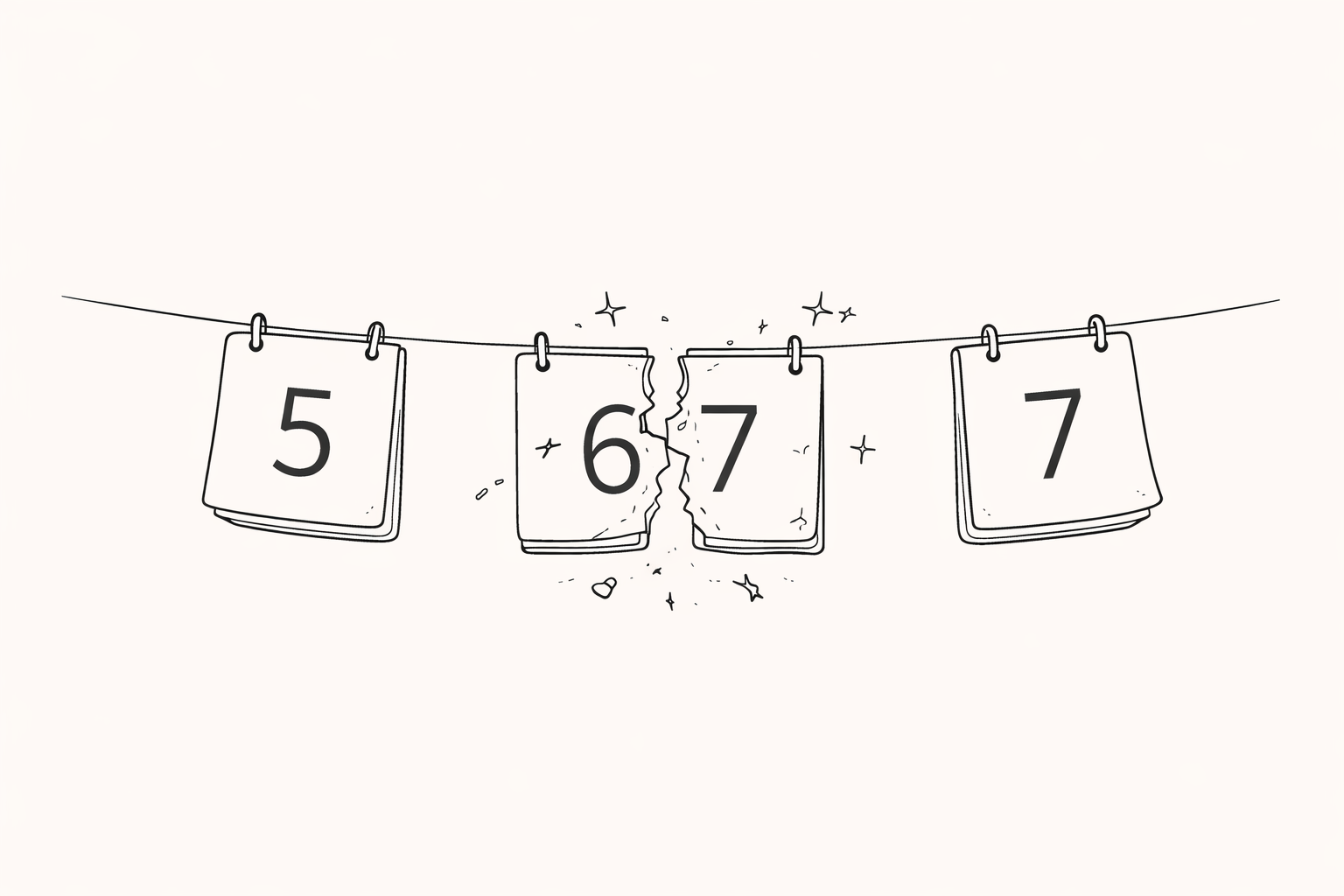
There's something almost magical about a streak. Day 1 feels like nothing. Day 10 starts to mean something. Day 30? You'd do almost anything not to break it. Habit streaks are one of the most effective — and most misunderstood — tools in the world of behaviour change. Used well, they're a rocket booster for consistency. Used badly, they become a source of shame that makes you quit entirely.
So what's actually going on in your brain when you're protecting a streak? And why do some streaks motivate you while others make you anxious? Let's dig into the science — and figure out how to make streaks work *for* you, not against you.
What a Streak Actually Is (Psychologically Speaking)
A habit streak is a visible record of consecutive days you've completed a behaviour. It sounds simple, but it taps into several powerful psychological mechanisms at once.
First, there's the **loss aversion effect**, a concept deeply explored by Nobel Prize-winning behavioural economists Daniel Kahneman and Amos Tversky. Their research showed that humans feel the pain of a loss roughly twice as intensely as the pleasure of an equivalent gain. When you're on a 20-day streak, the thought of losing it hurts more than the thought of reaching 21 feels rewarding. That asymmetry is streak fuel.
Second, streaks create what psychologists call **identity reinforcement**. Every day you add to a streak, you're not just completing a task — you're gathering evidence that you're the kind of person who does this thing. James Clear, author of *Atomic Habits*, argues that this identity shift is the real foundation of lasting change. A streak makes your habit feel like part of who you are.
The Neuroscience Behind Why Streaks Feel So Good
Every time you tick off a habit and see your streak grow, your brain releases a small hit of dopamine — the neurotransmitter associated with anticipation and reward. Crucially, neuroscientist Wolfram Schultz's research on dopamine found that it's not just the reward itself that triggers the release — it's the *anticipation* of the reward. The streak counter becomes a cue that primes your brain to feel motivated *before* you've even started.
Over time, repeated streaks help carve a neural pathway between the cue (opening your habit app, seeing the calendar) and the action. This is the habit loop that Charles Duhigg described in *The Power of Habit*: cue → routine → reward. A well-maintained streak makes the cue stronger and the routine more automatic.
When Streaks Work Brilliantly
Streaks are most effective in a few specific conditions:
- **The habit is simple and repeatable daily.** Streaks thrive on consistency. A habit like "drink a glass of water in the morning" or "do 5 minutes of stretching" is ideal — low friction, high repeatability.
- **You're in the early stages of forming a habit.** Research published in the *European Journal of Social Psychology* by Phillippa Lally and colleagues found that habits take anywhere from 18 to 254 days to form, with an average around 66 days. Streaks are perfect scaffolding during this formation window.
- **The reward is tied to progress, not perfection.** Apps like SideQuest Daily use streaks alongside quest completion and XP, so a missed day doesn't erase all your progress — it just pauses one metric. That framing makes streaks motivating rather than punishing.
- **You can see the streak visually.** Visible streaks — like Jerry Seinfeld's famous 'don't break the chain' calendar method — are more motivating than invisible ones. The brain responds to visual progress cues.
When Streaks Backfire
Here's the uncomfortable truth: streaks can also destroy habits. Not in spite of their power, but *because* of it.
When a streak breaks — through illness, travel, a bad day — many people don't just feel disappointed. They feel like failures. And that emotion triggers what researchers call the **'what the hell' effect**, a phenomenon studied by Janet Polivy and C. Peter Herman. Once a rule is broken, people often abandon it entirely rather than resuming. "I broke my streak, so what's the point?" is one of the most common reasons people quit habits.
Streaks can also shift your motivation in unhealthy ways. Research from the self-determination theory camp — particularly work by Edward Deci and Richard Ryan — shows that when an intrinsically enjoyable behaviour becomes tied to an external metric, intrinsic motivation can decrease. If you're meditating to protect a number rather than because it helps you, the meditation itself starts to feel like a chore.
- **Perfectionism spiral:** One missed day feels catastrophic, so you either quit or develop anxiety around the habit.
- **Streak tourism:** You complete a habit as fast as possible just to protect the streak, without actually engaging with it.
- **All-or-nothing thinking:** The binary nature of streaks (broken or intact) doesn't reflect the reality of gradual progress.
- **Social comparison pressure:** When streaks are visible to others, the motivation shifts from personal growth to performance.
How to Recover When You Break a Streak
Breaking a streak is not failing. It's data. Here's the approach backed by behavioural science:
- **Never miss twice.** This is the single most powerful streak recovery rule, popularised by James Clear. One missed day is an accident. Two missed days is the start of a new (bad) habit. Restart immediately.
- **Reframe the miss.** Instead of "I broke my streak," try "I had an interruption." Language shapes how we process setbacks. An interruption is a pause; a failure is a story about who you are.
- **Use a 'get-back-on' quest.** SideQuest Daily's micro-quest format is perfect for this — a single, tiny action to re-engage your habit without pressure. Five minutes of movement, one page of reading, one deep breath. The goal is to restart the loop, not catch up.
- **Reduce the friction for tomorrow.** After a miss, remove one obstacle for the next attempt. Lay out your running shoes. Open the app before you sleep. Make resumption stupidly easy.
- **Acknowledge the streak you did have.** Seventeen days of a habit is seventeen days more than zero. That's real. Don't erase it because day 18 didn't happen.
The Best Streak Strategy: Flexible Consistency
The most sustainable approach to streaks isn't rigid "every single day" tracking — it's what behavioural scientists call **flexible consistency**: showing up most days, with a predetermined tolerance for imperfection built in.
Some habit apps (including sidequestdaily.com) offer streak shields or grace days for exactly this reason. A single missed day doesn't reset everything. This design choice is deliberate — it's rooted in research showing that perceived progress, not perfect records, is the key driver of long-term motivation.
Think of your streak less like a glass that shatters when dropped and more like a score that keeps climbing over time, with small dips along the way. The direction of travel matters more than the individual data points.
The goal of a habit streak isn't a perfect number. It's a consistent identity. Every day you show up — even imperfectly — is a vote for who you're becoming.
Making Streaks Work on sidequestdaily.com
SideQuest Daily was designed with all of this in mind. Daily quests are short (most take under 5 minutes), varied enough to stay fresh, and tied to a broader system of XP and rewards — so a single missed day never means losing everything you've built.
The app's quest categories — from mindfulness and movement to creativity and connection — also mean you're building multiple small habits in parallel rather than betting everything on one. If you miss your movement quest, you can still earn your creativity XP. Progress happens in layers, not lines.
Key Takeaways
- Habit streaks work because of loss aversion, identity reinforcement, and dopamine anticipation — all powerful psychological forces.
- They're most effective in the first 30–90 days of habit formation, when you're still building the neural pathway.
- Streaks backfire when they create perfectionism, anxiety, or shift motivation from intrinsic to external.
- The 'never miss twice' rule is the most evidence-backed recovery strategy after a broken streak.
- Flexible consistency — showing up most days, with grace for imperfection — produces better long-term results than rigid tracking.
- Apps like sidequestdaily.com are designed to use streaks as motivation tools, not punishments — keeping habits fun and resilient.
Do habit streaks actually work?
Yes — when used thoughtfully. Research in behavioural economics and neuroscience shows that streaks leverage loss aversion and dopamine anticipation to drive consistency. They're especially effective in the early stages of habit formation (the first 30–90 days). The key is pairing streaks with a forgiving system that doesn't punish a single missed day too harshly.
How long does it take to build a habit streak?
Research by Phillippa Lally at University College London found that habits take an average of 66 days to become automatic, though the range spans from 18 to 254 days depending on the person and the habit. A streak is most useful as scaffolding during this formation window — it keeps you showing up until the behaviour becomes self-sustaining.
What should I do when I break a habit streak?
The most important thing: restart immediately. Behavioural scientists and habit experts consistently recommend the 'never miss twice' rule — one missed day is an accident, two is the beginning of a new pattern. Reframe the miss as an interruption, not a failure, and reduce the friction for tomorrow's attempt.
Are streak-based habit apps better than paper tracking?
Both can work — the best method is the one you'll actually use. Digital apps like sidequestdaily.com have advantages in streak recovery features (grace days, streak shields) and varied habit prompts, which help prevent the all-or-nothing mindset that paper tracking can sometimes trigger. Apps also deliver the visual progress cue immediately, which strengthens the habit loop.
Can streaks be bad for motivation?
They can, yes. Self-determination theory research by Edward Deci and Richard Ryan shows that tying an intrinsically enjoyable behaviour to an external metric can reduce intrinsic motivation over time. Streaks can also fuel perfectionism and the 'what the hell' effect — where breaking a streak leads to quitting entirely. The antidote is using streaks as one tool among many, within a system that values flexible consistency over perfect records.
How many days in a row do you need to streak before a habit sticks?
There's no magic number, despite the popular '21 days' myth. Lally's 2010 research suggests 66 days on average for automaticity — but the more important factor is the quality of each repetition, not just the count. A streak that keeps you engaged and returning is doing its job even if it's only 10 days long.
Ready to build better habits?
Sidequest turns micro-habits into daily 5-minute quests. One-time purchase, no subscription.
Download on the App Store